
Over 50 contractors are already live with Groundhawk to meet that requirement: real-time 3D capture in the trench, no surveyors needed. If your organisation is rethinking how it records what goes into the ground, or you'd simply like to see the workflow in action, come find us at D70.
More network owners are mandating digital as-built documentation from their contractors.
The UK spends an estimated £2.4 billion a year dealing with the fallout from underground utility damage that better documentation would have prevented. That figure comes from Groundhawk co-founder and CEO Christoffer Winquist, writing in New Civil Engineer this month on what the UK could learn from Germany's approach to recording what's buried underground.
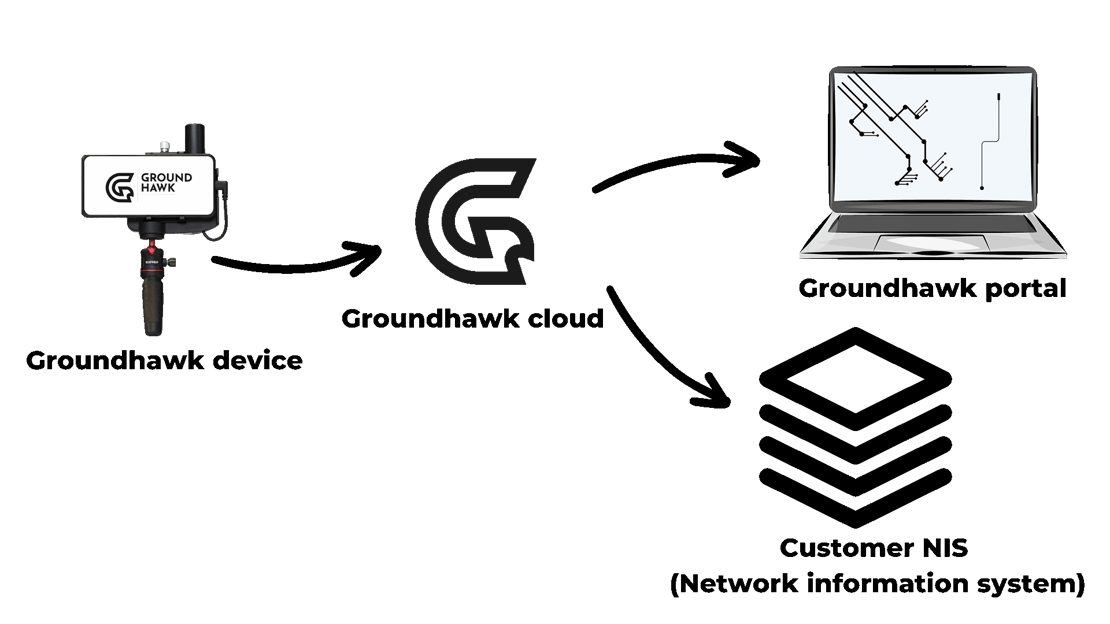
That's the same gap Groundhawk was built to close. Field crews already on site capture centimetre-accurate positions, depth, and geotagged photos while the trench is open, and that data goes straight into NIS formats utilities already use. No specialist surveyor required, no second visit once the ground is closed.
Recording exact cable and pipe positions while the trench is still open costs little at the point of installation, and it pays back later through fewer strikes, clearer subcontractor liability, and faster follow-on works. The scanning investment, on their own numbers, is straightforward to justify. That is why, more network owners are mandating digital as-built documentation from their contractors.
Groundhawk will be at stand D70
We'll be talking through this, and showing how the capture itself works, at Connected Britain 2026. The event runs 9 to 10 September at ExCeL London, and Groundhawk will be at stand D70. Connected Britain brings together 8,000 industry experts, innovators, and policymakers to shape the future of the UK’s digital economy.
If your organisation is rethinking how it records what goes into the ground, or you'd simply like to see the workflow in action, come find us at D70.
Want to see how Groundhawk works on a real project? Book an online demo and we'll walk you through the full capture-to-record workflow.
Comments